A video shows an executive authorizing a wire transfer. An audio recording captures a witness making a damaging admission. A document bears a signature that matches the original on file. None of them are real.
That is no longer a hypothetical. Deepfake forensics exists because AI-generated media has become sophisticated enough to deceive, and the legal and investigative consequences of undetected fabrication are severe enough that no complex matter involving digital evidence can afford to skip authentication. In 2026, digital evidence authenticity is not a question you ask only when something looks suspicious. It is a question you ask about every piece of digital evidence that matters.
Why Deepfake Detection Has Become an Investigative Baseline
The technology that produces deepfakes has changed faster than most legal and compliance professionals have had time to notice. What required significant technical expertise and computing resources a few years ago is now accessible through consumer applications. The gap between what can be fabricated and what can be detected through visual inspection has widened to the point where visual inspection alone is no longer a reliable method for establishing digital evidence authenticity.
The numbers make this concrete. Document deepfakes, AI-generated invoices, contracts, identity documents, and financial statements submitted as genuine, are projected to grow 3,892% in 2026, according to the Shufti Identity Fraud Index as cited in ASIS International, June 2026. A 2025 study by iProov found that only 0.1% of people can accurately detect AI-generated content. These are not statistics about a future threat. They describe the environment in which digital evidence is being created, submitted, and evaluated right now.
Deepfake forensics USA practice has developed in direct response to that environment. The discipline applies forensic methodology to the authentication question that visual inspection can no longer reliably answer.
What Deepfake Forensics Actually Examines
Video Deepfake Detection
Video is the media type most commonly associated with deepfakes, and for good reason. AI-generated video can produce highly convincing representations of people saying things they never said, in environments they were never in, at times they did not exist on camera.
Deepfake detection in video examines multiple layers simultaneously. Facial inconsistencies, including unnatural blinking patterns, lighting mismatches between the subject and the background, and edge artifacts around the face and hairline, are among the most common indicators of AI generation. Temporal inconsistencies, the way facial features move in relation to each other between frames, can reveal synthesis that static frame analysis would miss.
Compression artifact analysis examines the underlying file structure rather than the visible content. AI-generated video leaves characteristic patterns in how the file is compressed that differ from authentic recordings. Metadata examination, including creation timestamps, device identifiers, and editing history, can reveal provenance inconsistencies that the visual content does not.
Audio Deepfake Detection
Synthetic audio has become one of the most practically dangerous categories of fabricated evidence. AI voice cloning can produce highly convincing reproductions of specific individuals saying things they never said, from a relatively small sample of authentic audio.
Digital evidence analysis of audio applies spectrographic examination to identify the frequency patterns that AI synthesis produces differently from authentic speech. Vocal consistency analysis looks for inconsistencies in breathing patterns, micro-pauses, and background noise characteristics that indicate synthesis rather than authentic recording. Encoding characteristics and technical file indicators of AI generation provide a layer of analysis that exists independent of the audible content.
Document Deepfake Detection
Document deepfakes are among the fastest-growing categories of fabricated evidence in financial fraud and corporate investigations. A convincing AI-generated invoice, contract, or financial statement may be visually indistinguishable from a genuine document. The distinction exists in the metadata and the provenance record.
Deepfake forensics applied to documents examines the metadata embedded in the file: creation date, editing history, software signatures, and authorship data that authentic documents accumulate through their natural creation process. AI-generated documents typically lack this history or contain metadata inconsistencies that indicate fabrication.
Font and formatting analysis examines subtle inconsistencies in rendering, kerning, and spacing that AI generation introduces. These inconsistencies are invisible to casual inspection but detectable under forensic examination. Most critically, a genuine document has a traceable creation history. A fabricated document typically does not, and the absence of that history is itself significant evidence.
Multi-Modal Analysis
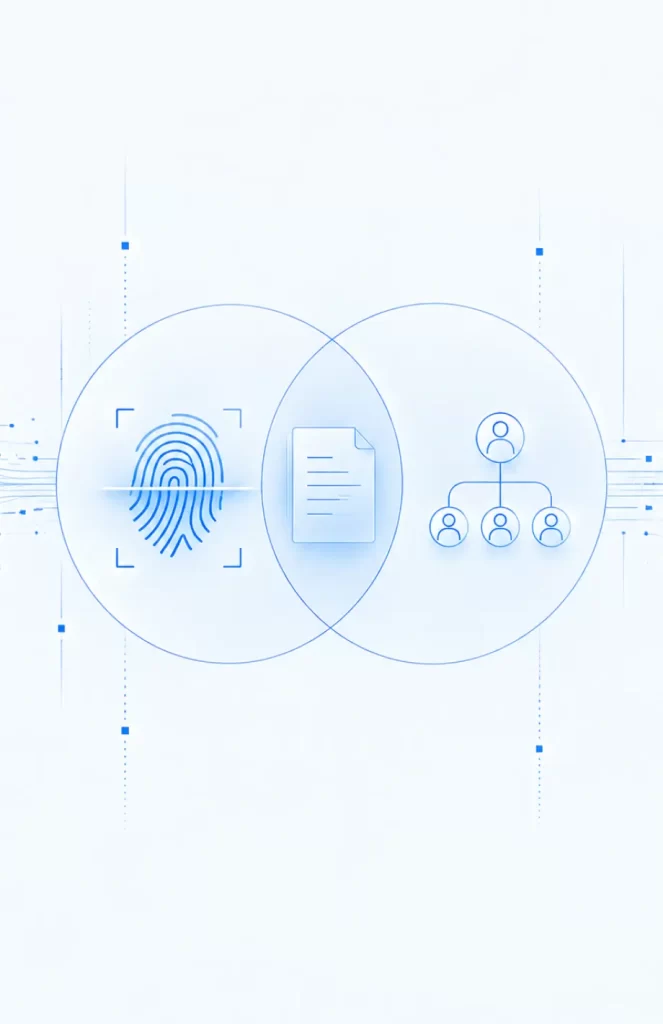
Sophisticated fraud schemes do not rely on a single fabricated artifact. They introduce multiple forms of fabricated evidence simultaneously: a fabricated video supported by a fabricated document supported by a fabricated audio recording, each designed to corroborate the others.
Digital evidence analysis in complex matters requires examining all evidence types in combination. Inconsistencies between fabricated elements frequently surface when they are analyzed together rather than in isolation, because the different AI systems used to generate each artifact produce subtle inconsistencies in how they represent the same underlying facts.
The Digital Evidence Authenticity Standard
What Courts Require
Digital evidence authenticity is a legal requirement, not an optional quality check. Under the Federal Rules of Evidence, evidence must be authenticated before it is admitted, meaning the proponent must produce sufficient evidence to support a finding that the item is what it claims to be.
For digital evidence, authentication requires establishing that the content has not been altered and that it originated from the claimed source. Visual inspection by a non-expert does not meet this standard in a world where AI generation can produce content that passes visual inspection. Deepfake forensics provides the documented, expert-validated digital evidence analysis that does.
The draft Federal Rule of Evidence 707, which addresses AI-generated evidence specifically and completed its public comment period in February 2026, signals that courts and rule-makers are actively developing the framework within which deepfake detection findings will be evaluated. Organizations that have not yet developed a Deepfake Forensics USA capability are building toward a standard that is already being established around them.
Chain of Custody
Digital evidence authenticity analysis begins with how evidence was collected, stored, and transmitted before it reached the forensic examiner. Evidence that has passed through multiple hands without documented chain of custody is evidence whose authenticity cannot be fully established regardless of what the content analysis shows.
Deepfake forensics engagements require the same chain of custody discipline as any other forensic examination. The provenance of the evidence before it reached the examiner is part of the authentication analysis, not separate from it.
Expert Testimony
Deepfake detection findings that will be used in legal proceedings need to be produced by qualified forensic professionals who can explain the methodology, defend the conclusions, and withstand cross-examination. A deepfake forensics finding is only as strong as the expert who produced it and the methodology they can articulate and defend.
This is the same standard that applies to all forensic expert testimony. What makes it particularly important in the deepfake forensics context is that the technology is new enough that courts, juries, and opposing experts may not have prior experience evaluating the methodology. The forensic expert needs to be able to explain it clearly and defend it specifically, not rely on the court’s familiarity with established techniques.
Where Deepfake Forensics Is Needed in 2026
Corporate Fraud and Financial Crime
Fabricated invoices, forged contracts, and manipulated financial documents are the most common applications of document deepfake technology in financial crime. Deepfake forensics USA investigations increasingly require document authentication as a standard component of forensic accounting and investigation, because the documents themselves, previously a reliable starting point for financial reconstruction, can no longer be assumed to be genuine without examination.
Employment and Misconduct Matters
AI-generated audio and video evidence has appeared in employment disputes, harassment allegations, and misconduct investigations. Digital evidence analysis in these contexts needs to assess whether the evidence is authentic before any conclusions are drawn from its content, because a finding based on fabricated evidence is not just wrong. It is potentially the basis for disciplinary action, litigation, or regulatory proceedings that should never have been initiated.
Litigation Support
Any matter in which digital media, documents, or audio recordings are presented as evidence is now a matter in which deepfake detection should be considered as part of standard digital evidence analysis. The question is not whether deepfakes are common enough to warrant consideration in every matter. The question is what the cost is of failing to identify a fabricated piece of evidence that determines the outcome of a proceeding.
Regulatory and Government Investigations
Deepfake forensics USA capabilities are increasingly relevant to organizations under government investigation where the digital evidence authenticity of materials being used by investigators is disputed, or where the organization needs to establish the authenticity of its own evidence against challenge.
The standard for digital evidence authenticity has not changed. What has changed is the sophistication of the tools available to fabricate evidence and the ease with which those tools can be deployed. Deepfake forensics is the discipline that closes the gap between what evidence appears to be and what it actually is.
In a legal or investigative context, that gap determines outcomes. A fabricated document that passes authentication shapes a fraud recovery case. A synthetic audio recording that goes unchallenged shapes an employment matter. A deepfake video that is not identified for what it is shapes a trial.
Digital evidence analysis that addresses authenticity as a baseline question, rather than only when something looks suspicious, is the practice that those outcomes demand.
Gemean’s digital forensics team provides deepfake forensics and digital evidence authenticity analysis for litigation, regulatory, and investigative matters across the United States.
What is deepfake forensics and how does it work?
Deepfake forensics is the forensic discipline that examines digital media, including video, audio, images, and documents, to determine whether the content is authentic or has been AI-generated or manipulated. It applies forensic methodology, including metadata analysis, compression artifact examination, spectrographic analysis, and provenance investigation, to establish digital evidence authenticity to the standard that legal proceedings require.
Can deepfakes be used as evidence in court?
Fabricated evidence is not admissible, but the challenge is that a deepfake submitted as genuine evidence will be treated as genuine unless deepfake detection identifies it as fabricated. The Federal Rules of Evidence require authentication of digital evidence, and deepfake forensics provides the documented expert analysis that meets that standard and can identify fabricated content before it affects proceedings.
How do forensic experts detect deepfake videos?
Deepfake detection in video examines facial inconsistencies, temporal movement patterns, compression artifacts in the underlying file structure, and metadata provenance. The analysis operates at multiple layers simultaneously, because AI-generated video may pass examination at one level while leaving detectable indicators at another. The combination of content analysis and technical file examination is what produces a reliable digital evidence authenticity assessment.
How common are document deepfakes in fraud investigations?
Document deepfakes are among the fastest-growing categories of fabricated evidence. According to the Shufti Identity Fraud Index as cited in ASIS International in June 2026, document deepfakes are projected to grow 3,892% in 2026. In Deepfake Forensics USA practice, document authentication has become an increasingly standard component of forensic accounting and fraud investigations, because AI-generated financial documents can be visually indistinguishable from genuine ones without forensic examination.
What qualifications should a deepfake forensics expert have?
A qualified deepfake forensics expert should have formal training and experience in digital forensics, including video, audio, and document examination. They should be able to explain their methodology clearly to non-technical audiences, document their analysis to an evidentiary standard, and defend their conclusions under cross-examination. Digital evidence analysis findings that cannot be explained and defended are findings that will not survive challenge in legal proceedings.