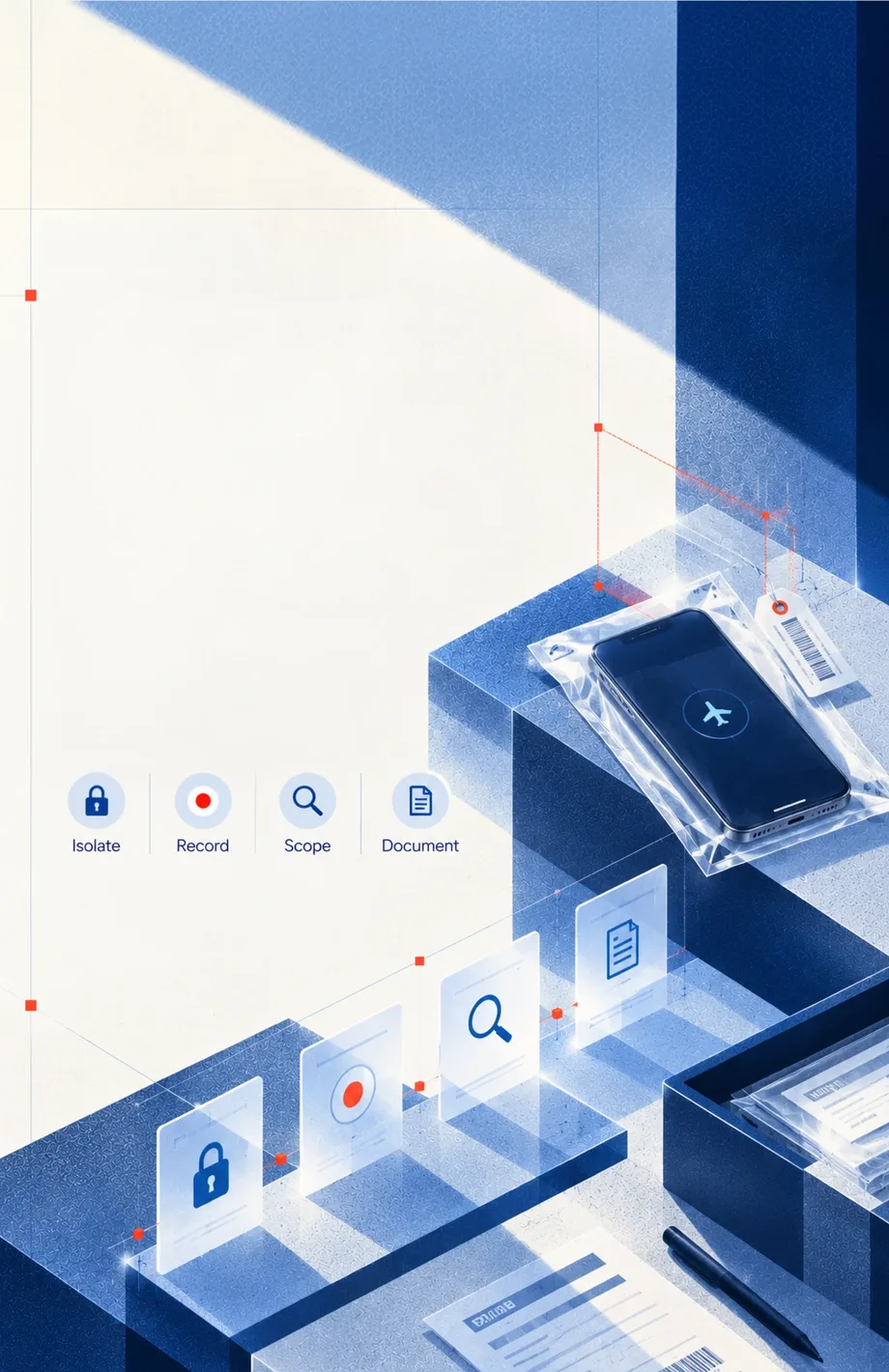
Legal hold software helps a legal team send preservation notices, track who has responded and keep a dated record of every step. Many teams still run holds from an email folder and a spreadsheet. That can work for one matter and three custodians. It tends to break at ten matters and a hundred custodians.
The cost of a break is real. Under Federal Rule of Civil Procedure 37(e), a court can order measures against a party that failed to take reasonable steps to preserve electronically stored information (ESI) once litigation was anticipated. A hold you cannot document is hard to defend.
This guide explains what legal hold software does, how it fits the legal hold process, where spreadsheets fall short, which features matter and how to choose between software, a managed service or both.
Key takeaways
- Legal hold software manages a hold from the first notice to the final release, and keeps proof of each step.
- Spreadsheets record entries but do not follow up, flag gaps or show who changed what.
- The features that matter most are acknowledgment tracking, coverage of chat and mobile sources, an exportable audit trail and a release workflow.
- No tool replaces counsel's judgment on scope. Rule 37(e) turns on reasonable steps, not on which product you own.
- Ask every vendor what the tool does automatically and what still depends on your IT team.
What does legal hold software do?
Legal hold software manages the life of a hold, from the first notice to the final release. At a minimum, a good platform should help you:
- identify custodians and the systems where their data sits
- issue notices and collect written acknowledgments
- send reminders and escalate when someone stays silent
- keep a dated record that can be exported on request
- release the hold when the matter ends
That sequence follows the ground covered in The Sedona Conference Commentary on Legal Holds, Second Edition (June 2019), which addresses when the duty to preserve arises, what a hold should cover and how a hold is released.
Software does not decide scope or privilege. Counsel still chooses who is a custodian and what is relevant. The tool makes those choices easier to carry out and easier to prove, and it keeps each custodian acknowledgment on record so you can show who confirmed the notice and when.
Why do spreadsheets and email fall short for legal holds?
A spreadsheet records what someone typed. It does not send a reminder, flag a missed acknowledgment or show who edited a row last. Four gaps appear again and again:
- No follow-up. Someone has to remember to chase every silent custodian, matter by matter.
- A thin audit trail. Edits overwrite earlier entries, so you cannot easily show what you knew on a given date.
- Version drift. Two people keep two copies, and neither matches the notices that went out.
- Limited scale. A tracker that suits one matter becomes unreliable across many.
Courts expect more than a single email. The Zubulake decisions from the Southern District of New York (2003 and 2004) are widely cited for the point that counsel must take affirmative steps to monitor compliance with a hold. A tracking tool turns that duty into a routine.
Regulators ask similar questions. The Department of Justice's Evaluation of Corporate Compliance Programs (updated September 2024) tells prosecutors to consider how policies were communicated to employees and whether the company enforced them in practice. Acknowledgment records are one way to show both.
Which legal hold software features matter most?
Feature lists run long, so focus on the ones that change outcomes:
- Custodian and source tracking. Record people, shared drives, chat channels, cloud folders and mobile devices in one place, with an owner for each.
- Notice templates with delivery tracking. You should see who received a notice, who opened it and when.
- Acknowledgment tracking with reminders and escalation. Silence is the most common gap, so the tool should keep asking.
- Custodian questionnaires. Short questions about where people keep data, including personal devices and messaging apps, surface sources no one listed.
- Coverage for chat and mobile data. Pew Research Center's 2026 survey found that 91% of U.S. adults own a smartphone, so phones belong in the map. Gemean's mobile forensics work covers that gap.
- A complete audit trail. Every notice, reminder, edit and release should carry a date and a user, and export cleanly.
- A release workflow. The tool should prompt a review before a hold ends and record who approved it.
- Integration with your eDiscovery platform. Custodians and sources should flow into collection without retyping.
- Security and access controls. Notices describe the matter, so limit who can see them.
Will legal hold software suspend auto-delete for you?
Not always. Some tools only track and notify. Others connect to email, collaboration and storage systems and can apply holds directly. Ask the vendor which systems are connected. For every system that is not, find out who on your IT team suspends deletion and how that step is recorded.
The 2015 Committee Notes to Rule 37(e) say the rule recognizes that "reasonable steps" suffice and does not call for perfection. They also say a court may look at whether a party knew of and protected against risks such as a cloud service failing. A written map of what the tool covers, and what it leaves to people, is part of a credible answer.
Should you buy legal hold software, use a managed service or both?
The answer depends on volume and staffing.
- Software alone suits teams with in-house staff who run holds often and have time to chase custodians.
- A managed service suits teams with uneven volume, small staff or tight deadlines, because trained people administer the process.
- Both is common: a platform for the record, plus a team that sends notices, follows up and reports.
Whichever route you take, put these questions to the provider:
- Who sends notices and chases custodians?
- Where is the data hosted, and who can access it?
- Can we export the full record, including notices, acknowledgments, reminders and dates, in a usable format?
- How are chat and mobile sources handled?
- What happens to active holds if a product or contract changes?
How Gemean helps with legal holds
Gemean is a New York forensic consultancy that offers end-to-end legal hold services in the USA, from preserving relevant records to managing compliance. Because the firm also works in eDiscovery and mobile forensics, it can connect a hold to collection when a matter moves forward. Our earlier article on reducing legal hold risk through data governance covers the groundwork. If you want a second set of eyes on your process, contact our team.
FAQs
What is legal hold software?
Legal hold software is a system for issuing preservation notices, tracking acknowledgments, sending reminders and keeping an audit trail until a hold is released. It supports the legal team's decisions and records them.
Is a legal hold the same as a litigation hold?
In practice the terms are used interchangeably. Both describe the steps an organization takes to preserve information that may be relevant to a pending or reasonably anticipated legal matter.
Can we manage legal holds in a spreadsheet?
You can, and some small teams do. The risk is that a spreadsheet does not follow up, flag missed acknowledgments or keep a reliable history of changes. Those gaps matter most when a preservation decision is challenged.
When does the duty to preserve begin?
Rule 37(e) refers to ESI that should have been preserved "in the anticipation or conduct of litigation." That can be before a complaint is filed, so the trigger depends on the facts, such as a credible threat of suit or a regulator's request.
Does legal hold software stop auto-delete automatically?
It depends on the product and on which systems are connected. Many tools track and notify, and rely on IT to suspend deletion. Confirm which systems are covered before you rely on the tool.
Sources
- Federal Rules of Civil Procedure, Rule 37 and 2015 Committee Notes (Legal Information Institute, Cornell Law School): https://www.law.cornell.edu/rules/frcp/rule_37
- The Sedona Conference Commentary on Legal Holds, Second Edition: The Trigger & The Process (The Sedona Conference, June 2019): https://www.thesedonaconference.org/publication/Commentary_on_Legal_Holds
- Evaluation of Corporate Compliance Programs, updated September 2024 (U.S. Department of Justice, Criminal Division): https://www.justice.gov/criminal/criminal-fraud/page/file/937501/dl
- Mobile Fact Sheet, 91% of U.S. adults own a smartphone (Pew Research Center, 2026 survey): https://www.pewresearch.org/internet/fact-sheet/mobile/
- Zubulake v. UBS Warburg LLC, 220 F.R.D. 212 (S.D.N.Y. 2003), summary of the duty to preserve and litigation hold requirement (U.S. NOAA Office of General Counsel, litigation holds white paper): https://www.gc.noaa.gov/documents/litigation-holds-whitepaper.pdf
- Zubulake v. UBS Warburg, overview of the decisions, including counsel's duty to monitor compliance (secondary summary, Wikipedia): https://en.wikipedia.org/wiki/Zubulake_v._UBS_Warburg
- Gemean home page, services (Gemean): https://gemean.com/